Thursday, November 3, 2011

Myracle’s New Book “Shines”


When the National Book Foundation called Lauren Myracle to tell her that her book "Shine" (Amulet Books, 2011) was a finalist for the National Book Award in the Young People's Literature category, she was surprised--and thrilled. A short time later, in an unprecedented move, the Foundation added a sixth finalist, Franny Billingsley's "Chime" (Dial Books, 2011). Two days later, Myracle got another call from the Foundation. It seems there had a been a mix-up: the judges had read their list of finalists over the phone, and apparently the Foundation heard "Shine" instead of "Chime." Myracle was asked to remove her book from the list "to preserve the integrity of the award and the judge's work," the author told the New York Times. Myracle was crushed, but agreed to do so. Soon, there was an outpouring of support for Myracle, and Amazon sales of "Shine" skyrocketed. 
            So is "Shine" worthy of being a National Book Award finalist? I haven't read the books on the list yet, so I couldn’t really say. But if they are better than this dark and beautiful novel, then it is a strong field indeed.
            Seventeen year-old Patrick is found near death, strung to the pump of the local gas station where he worked with the nozzle of a gas pump in his mouth and an anti-gay slur scrawled across his chest. The sheriff of his local small North Carolina town is quick to pin the blame on out-of-town gay bashers. But Cat, his childhood friend, suspects that perpetrator is home-grown. Driven by love for her friend and guilt over a past betrayal, she is determined to find Patrick’s would-be-killer, despite the urging of her friends and family to stay out of it. As Cat uncovers the ugly truth about the crime, she confronts her own demons—the demons that caused a rift in her friendship with Patrick and others. Filled with memorable characters, richly atmospheric, "Shine" throws an important light upon anti-gay bigotry and the meth epidemic in rural areas of this country.
Some good has come of the "Shine" debacle. Rather than giving Myracle the $1,000 she would have received as finalist, the National Book Foundation has agreed to donate $5,000 to the Matthew Shepard Foundation, an organization that promotes tolerance of gay teens. The foundation is named for a student killed in a notorious anti-gay hate crime in 1998.

This review originally appeared in the Sunday, October 30 edition of The News-Gazette.


Wednesday, October 26, 2011

Forensic science in the news: October is National Cyber Security Awareness Month

Do hackers have it in for Sony, or have they just found an easy--and very large--target? Back in April, hackers broke into Sony's PlayStation Network and walked away with personal, and possibly credit card, information of 100 million customers. The company had to shut down several online services and rework its security system. 

Intruders once again hacked into Sony's network this month, stealing tens of thousands of IDs and passwords. Sony quickly locked the accounts emails users on how they could reset their passwords; the company said that credit card numbers were not at risk. 

Still it's a reminder of just how important it is to protect yourself online. One quick tip: don't use the same password  for online gaming that you use for your bank account, for example. 

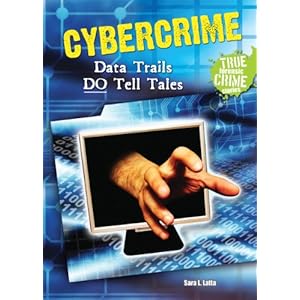
Visit www.staysafeonline.org for the latest cybersecurity tips. Or you can check out my book Cybercrime: Data Trails DO Tell Tales, especially Chapter 3, "Viruses, Bots, and Zombies--Oh My!" and Chapter 4, "You've Got Spam!"

Sunday, October 9, 2011

Forensic Science in the News: RIP, Steve Jobs

I came on board pretty early with Apple. It must have been 1984 or 1985 when my research advisor at the University of Chicago bought a few computers for the lab. I hadn't had a lot of experience with computers at the time--well, who had?--but this one seemed different from the other clumsy personal computers that were available at the time. I loved it. I wrote much of my thesis on it. When it came time to buy a computer of my own, I didn't think about anything other than a Mac.

Fast forward. I'm writing this on my new 27-inch (the better to accomodate my aging eyes) iMac. I've worked, reluctantly, on PCs at other jobs, but at home I've always had Macs, iPhones, and now an iPad. I'm not an acolyte, exactly, but I know what works for me, and Apple has always worked for me.

So Steve Jobs, the co-founder of Apple and the genius behind the modern brand, has always been a special figure in my life. Something you might not know is that Jobs and Steve Wozniak, co-creators of the original Apple computer, had been inspired by a 1971 article in Esquire magazine (reprinted here) about "phone phreaks," a group of people who realized that they could manipulate the computerized phone network to place free calls anywhere in the world.

You can learn more about Jobs' involvement with phone phreaks* and the history of computer hacking in my book, Cybercrime: Data Trails DO Tell Tales (Enslow Publishers, 2011). Jobs, like the other early computer hackers, weren't interested in stealing data--they simply wanted to understand the ways in which computers  and computer networks worked.

*"Phreaking" is a portmanteau word made by combining "freak" an "phone" (and, in some definitions, "free"). Lewis Carroll, the author of Through the Looking Glass, adopted the word "portmanteau"--the French word fo suitcase--to describe combining the sound and meaning of two words to create a new one. (Cybercrime: Data Trails DO Tell Tales, Enslow Publishers, 2011, p. 26)

A Love Story for Dog Lovers


“A hundred and two days.” So begins Paul Griffin’s young adult novel, “Stay With Me” (Dial Books, 2011). That’s probably about the length of the average teenage romance, Griffin writes, but the relationship between Mack Morse and Céce Vaccuccia is anything but average.
            Mack is a shy fifteen year-old high school dropout with a learning disability and a criminal record. His mother has been AWOL since he was eight, driven away by his brutal, alcoholic father. But he has gift: he has a way with dogs. He rescues, rehabilitates, and trains abused and abandoned fighting dogs.
            Fifteen year-old Céce is no child of privilege, either; she lives with her loopy mother and brother, just barely making ends meet. But their goodbyes always end with, “Love you like a crazy person,” and Céce is a straight-A student hoping to be able to transfer to a school for the gifted and talented.
            Written in chapters that alternate between Mack’s and Céce’s points of view, “Stay With Me” is the story of the star-crossed teens’ 102-day romance. Mack is strong-armed into looking out for Céce by her brother (who also happens to be Mack’s friend) when he enlists in the Army. Despite a rocky start, the two are soon a couple, and they begin to dream of a future together. Mack is training a rescued pit bull that he calls Boo. He hopes to gives it to Céce, who has grown to love the dog. And then Mack makes a terrible mistake, and suddenly their future together is impossible.
            Griffin has such a way with characters. Mack is deeply conflicted and struggles with his anger, yet he has a huge heart. His tenderness and love for Céce and his dogs is touching. Céce is funny, insecure about her weight (one of the things I love about Mack is that he doesn’t seem to notice that she’s a little overweight), and cares deeply about her family.
Even the supporting characters are complex and memorable. Anthony, Céce’s older brother, and Vic, the kind-hearted owner of the café where they work, are steady moral compasses throughout the story. Céce’s mother dyes her hair crazy colors, drinks too much, and bakes inedible holiday-themed cornbread to cope with the anxiety of her son’s impending deployment.
            “Stay With Me” contains sexual themes and some violent scenes that make it appropriate for older teens. The book does not have a “happily-ever-after” ending, but it is full of heart, redemption, and hope for a better future. It may just make you want to take in a rescue dog. 


Advance review copy provided by the publisher. This review originally published in The News-Gazette, Sunday, October 9, 2011. 


Tuesday, September 20, 2011

Forensic science in the news: Ned Kelly's Bones

Ned Kelly the day before his execution.
Note the awesome hairdo and beard!
(Source: Wikipedia)
As promised, to celebrate the publication of my forensic science books, I'm starting a new series on this blog: "Forensic Science in the News." First out of the circle is an article that appeared in the New York Times a couple of weeks ago, "A Hero's Legend and a Stolen Skull Rustle Up a DNA Drama."

Now, before reading this article my knowledge of the Australian folk hero Ned Kelly was pretty much confined to the fact that there is an Illinois chain if steakhouses named after the man--or at least there used to be, until they all went belly-up, leaving some employees unpaid. Ned Kelly would have been rolling in his grave, if not for the fact that his bones are at the Victorian Institute of Forensic Medicine. Well, all but his skull. But I'm getting ahead (pardon the pun) of myself.

Ned Kelly was born in 1854, the son of an Irish convict exiled to Australia. He took up arms against the British colonial authorities, robbed banks, and stole cattle. He dictated a letter describing the mistreatment of Irish Catholics by the police and British authorities, which the historian Alex McDermott called "one of the most extraordinary documents in Australian history." He was arrested after a shoot-out, wearing homemade metal armor, and was hanged in 1880.

He was buried in a mass grave, but his skeleton was recovered in 1929 when the site was slated for development. The remains were reburied, but in the chaos that ensued, two skulls, thought to be those of Kelly and notorious serial killer Frederick Bailey Deeming were stolen. Fast-forward to 2008, when yet another excavation uncovered the remains--at least 3,000 bone fragments, which were sent to the Institute.  Some of them might belong to Kelly, but how could they tell after all this time? To make matters more complicated, a man named Tom Baxter came forward with a skull he'd had for three decades, claiming that it was Kelly's.

The forensic scientists compared the skull with historical photographs and a copy of Kelly's death mask. They sent samples of the skull and other remains to a forensic laboratory in Argentina, where scientists there were able to extract DNA from the old and degraded samples. They found one of Kelly's distant relatives, a schoolteacher who was descended from Kelly's mother, who agreed to submit a blood sample for DNA analysis. They compared the DNA samples from the teacher, the skull, and the bone fragments. The verdict? The fragments, including a palm-size piece of skull, belonged to Ned Kelly. But DNA from the stolen skull was most definitely not Kelly's. Scientists at the Institute are trying to determine whether the skull belonged to the serial killer, Frederick Deeming.

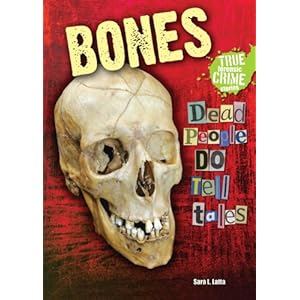
You can learn more about how forensic scientists used DNA to confirm the identify of a set of bones thought to have belonged to the notorious Angel of Death Joseph Mengle in the "Cold Cases" chapter of my book, Bones: Dead People DO Tell Tales. 

Monday, September 19, 2011

The Poisoned House: A Ghost Story


Take a plucky but downtrodden scullery maid, a tyrannical housekeeper, the Lord of the House teetering on the brink of madness, a very insistent ghost, and what do you get? “The Poisoned House: A Ghost Story” (Albert Whitman & Co., 2011), a deliciously creepy new gothic horror story by Michael Ford.

That plucky scullery maid is fifteen year-old Abigail Tamper—Abi, to her friends. As the book opens in 1850s London, Abi is attempting to escape her miserable life in Greave Hall, an elegant but increasingly troubled household. The chief architect of her misery is the tyrannical housekeeper, Mrs. Cotton, who punishes Abi for the slightest infraction. The return of Lord Greave’s son Samuel, injured in the Crimean War, seems to have only worsened his Lordship’s mental condition. And the ghost is none other than Abi’s mother, who had been Samuel’s childhood nurse before her death a year earlier.

After Abi’s foiled escape from Greave Hall, strange things start to occur. There is a mysteriously closed bolt that should be been left open. A handprint appears on both the inside and outside of the library window. Lord Greave’s drinking glass is shattered—but by whom? At first, Abi feels comforted by her mother’s ethereal presence, until she realizes that the ghost is trying to warn her of something. She is no longer safe at Greave Hall—if she ever was.

Although the plot of “The Poisoned House” is somewhat predictable (it does, after all, follow the conventions of the gothic novel), its many twists and turns provide plenty of suspense. And Ford has a real knack for creating terrific characters. Abi makes for a wonderful companion; she is resourceful and sympathetic, a young woman still trying to find her way in a world that seems not to love her. Mrs. Cotton is a villain in the finest Gothic tradition: cruel, petty, and domineering. I suspect Ford had the most fun creating her character, because aren’t villains always the most interesting?

Teens who enjoyed Neil Gaiman’s “Coraline” as younger readers will like “The Poisoned House.” And if gothic novels are your cup of tea, you really must read Charlotte Brontë’s “Jane Eyre,” one of the greatest gothic novels of all time. Preferably (with apologies to Miss Brontë) when the cold autumn wind brings with it “clouds so somber, and a rain so penetrating, that further out-door exercise is now out of the question.” 

Advance review copy provided by the publisher. This review originally published in The News-Gazette, Sunday, September 18, 2011. 

Friday, September 2, 2011

Look at what the FedEx man brought!


That's right...author's copies of Bones: Dead People DO Tell Tales, Cybercrime: Data Trails DO Tell Tales, and DNA & Blood: Dead People DO Tell Tales (Enslow, 2011).

I nearly threw my arms around the FedEx guy and kissed him, but fortunately for both of us I merely smiled and signed for them.

If dead bodies, bloody footprints, or zombie computers are your thing, I've got the books for you. And, I'm happy to report, they are available both in library and paperback editions. You can order them from Amazon, Barnes & Noble, or your favorite independent bookstore.

To celebrate, I'm going to start a series of blog posts about the true crime stories and forensic science featured in the books. First up: The Murderous Beginnings of Forensic Anthropology.